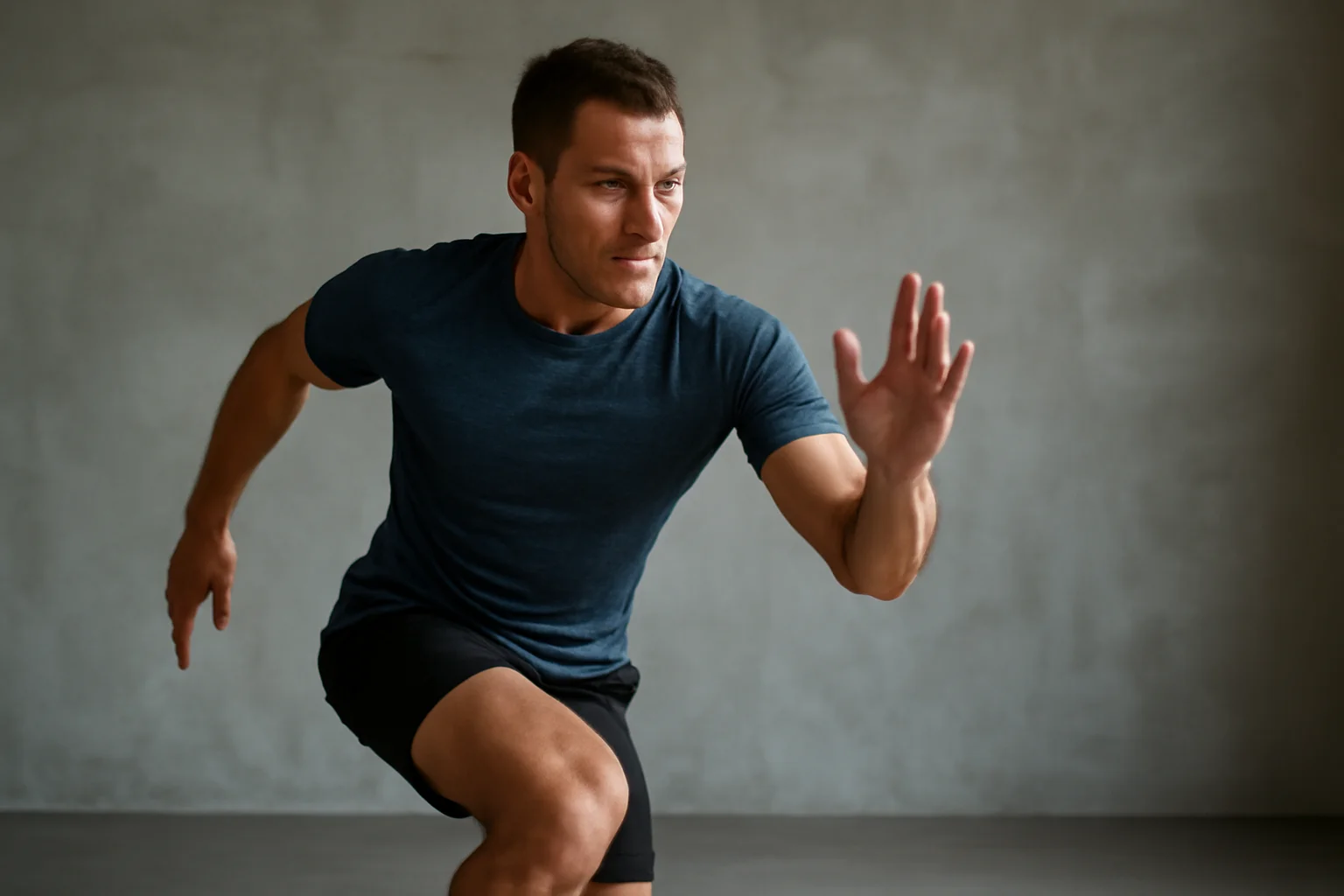
Body Flexibility Determines Victory: 3 Key Areas to Boost Athletic Performance
When it comes to sports performance, strength alone isn’t everything — how well your body moves and absorbs force often decides who wins.
That’s where deceleration training comes in.
The goal of deceleration training is to help you control both force and movement — knowing when to apply strength, and when to release it smoothly. It’s about training your body to move freely, efficiently, and powerfully.
Whenever I train professional athletes, we almost always start with this.
💡 Coordination: The Secret Behind Deceleration Skills
Improving your coordination is the foundation of deceleration training. My approach focuses on how the body’s key parts work together as one system — mainly the shoulder blades, spine, pelvis, and hip joints.
These three regions control almost every movement you make.
If you want explosive power and speed, you must learn how to make them work in perfect harmony.
I also include stretching and strengthening for each of these areas individually. But the bigger goal is always to build full-body connection and smooth energy transfer — that’s what makes athletes truly powerful.
⚙️ The 3 Key Connection Points
Let’s take a closer look at the three most important areas that affect your mobility, stability, and overall performance.
🦴 1. The Spine — Your Power Highway
Your spine connects the upper and lower body — it’s the main highway for energy transfer between your hips and shoulders.
It also supports your head and upper body, working like the central pillar of your movement.
The upper part of the spine is protected by your ribs (the “rib cage”), making it stable. But the lower part — the lumbar spine — lacks that protection, so it’s naturally less stable.
That’s why so many people experience stiffness or lower back pain — their muscles tighten up to compensate for that instability.
Simply massaging or stretching the area won’t fix the problem. What really helps is activating your core muscles, especially the transverse abdominis and pelvic floor muscles, which support the spine from deep within.
In sports, the spine’s biggest job is transmitting force.
For example, even if a pitcher builds strong legs, the power won’t reach the fingertips if the spine can’t pass it through smoothly.
When the small muscles around the spine get too tight, the whole power chain breaks.
That’s why a big part of deceleration training focuses on releasing tension and restoring freedom around the spine.
🧘♀️ 2. The Pelvis & Hips — The Power Core
The hips are at the center of everything you do — from walking and sitting to sprinting and jumping.
They have two main roles:
-
Allowing your legs to move freely (mobility)
-
Supporting your body weight (stability)
The tricky part? These two jobs contradict each other.
A joint that moves freely is usually less stable — and a stable joint doesn’t move easily.
The hips are designed to prioritize stability, which is why they often become tight and stiff.
The hip joint itself is shaped like a ball-and-socket — great for movement, but naturally unstable. That’s why it relies on many small muscles and ligaments working together to keep balance.
But in sports, the hips have a third critical role — power transfer.
They’re the bridge that sends energy from your legs to your upper body.
If your hips can’t handle or transfer that power efficiently, your movement loses strength and speed. This is one reason even elite athletes focus heavily on hip mobility and control.
Top performers have loose but strong hips — they can absorb impact from the ground and redirect it through the body efficiently.
That combination of mobility + stability + energy flow is what makes their movements so smooth and powerful.
To train your hips properly, you need both strength and flexibility, and you should include deceleration drills to improve how your body handles and redirects force.
🧩 3. The Shoulder Blades — The Upper-Body Engine
Though often overlooked, the shoulder blades are crucial for balance, posture, and generating power in your arms.
They work together with your spine and hips to complete the energy chain.
A well-coordinated upper back allows your arms to move freely without wasting strength.
When your shoulder blades move smoothly with your spine, every throw, swing, or lift becomes more efficient.
🏆 The Takeaway
True athletic power doesn’t come from isolated muscle strength — it comes from how well your body connects and moves as a system.
By focusing on the spine, pelvis & hips, and shoulder blades, and training your deceleration and coordination skills, you can move with greater control, stability, and explosive power.
Whether you’re an athlete or just want to move better in daily life, improving these key areas will help your body feel more balanced, agile, and free.